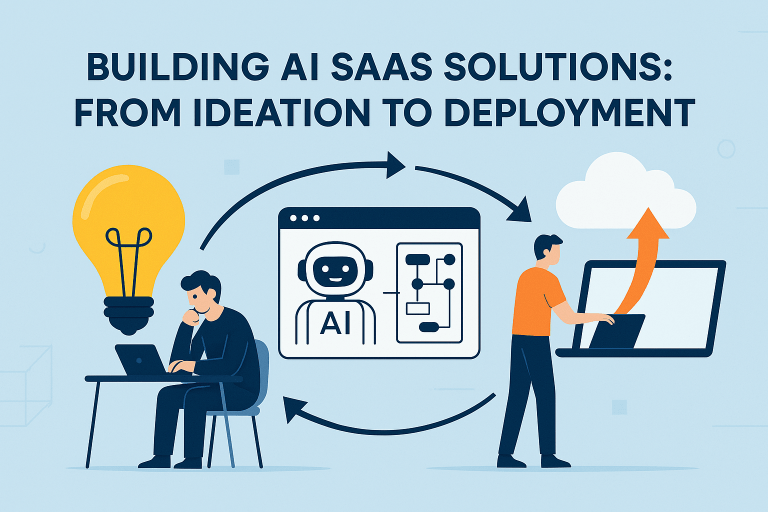
In today’s technology-driven world, artificial intelligence (AI) has become a cornerstone of innovation, especially in the realm of Software as a Service (SaaS). The development of AI SaaS products presents numerous opportunities for businesses to leverage sophisticated algorithms and data analytics to provide enhanced services. However, the journey from concept to launch requires a structured approach and adherence to best practices, particularly when utilizing modern web frameworks. This article will guide you through the essential stages of building AI SaaS solutions, focusing on ideation, architecture, development, deployment, and maintenance. By understanding each phase, you can effectively transform your AI concept into a robust product that meets market demands and exceeds user expectations.
Ideation and Market Research
The foundation of any successful AI SaaS product begins with a solid idea. This phase involves brainstorming potential applications of AI, identifying target markets, and conducting thorough competitor analysis. Understanding user needs and pain points is critical. Utilize surveys, interviews, and focus groups to gather insights. Look for gaps in existing solutions that your product can fill. Once you’ve gathered enough data, create a value proposition that highlights how your AI solution stands out. This clarity will not only guide your product’s specifics but also aid in securing stakeholder buy-in as you present your vision.
Architecting Your Solution
Once the concept is validated, the next step is to architect your SaaS product. Choose a suitable modern web framework such as React, Angular, or Vue.js for the front end, and consider Node.js or Django for the backend. Ensure your architecture incorporates scalability from the outset; utilize microservices to handle different components independently, allowing for flexibility and growth. Additionally, integrate reliable cloud solutions for storage and computation, such as AWS or Azure, to facilitate the heavy lifting required by AI algorithms. Pay attention to security measures, ensuring that user data is protected using best practices like encryption and secure API design.
Development and Integration of AI Models
The development phase involves the actual coding and the integration of AI models into your SaaS product. Begin by selecting appropriate AI technologies, such as machine learning frameworks like TensorFlow or PyTorch, based on your project’s requirements. Collaborate with data scientists to develop and train the models, ensuring a feedback loop that allows for continuous improvement. Make sure that your codebase is clean and maintainable, with proper documentation for future developers. Agile methodologies work well in this phase, allowing for iterative progress and adjustments as new insights and challenges emerge.
Deployment and Continuous Monitoring
With your product developed, the next focus is deployment and monitoring. Use containerization tools like Docker and orchestration platforms like Kubernetes to deploy your service efficiently. This ensures that your application runs consistently across different computing environments. After deployment, it’s crucial to implement robust monitoring systems to track performance, collect user feedback, and prepare for troubleshooting. This is especially important for AI models, which often require adjustments based on operational data. Regularly update and iterate on your product based on user behavior and analytics, fostering a culture of continuous improvement.
Conclusion
Building AI SaaS products is a complex yet rewarding endeavor that hinges on a structured approach and adherence to best practices. From initial ideation and market research to careful architecture, seamless development, and proactive deployment practices, each phase plays a pivotal role in the success of the product. By following these guidelines, you can successfully transform your AI concept into a market-ready solution that not only meets user needs but also evolves with the changing technological landscape. Embrace innovation with an agile mindset, and you will position your AI SaaS product for success.