Have you ever wondered how tools like ChatGPT give such accurate and human-like responses? The answer lies in something called prompt engineering. This growing field is all about learning how to ask the right questions — or give the right “prompts” to get the best results from AI models.
Whether you’re using AI for writing, coding, or research, the quality of your prompt affects the quality of the output. And in 2025, with AI becoming more powerful and widely used, prompt engineering has become a valuable skill for professionals, creators, and even everyday users.
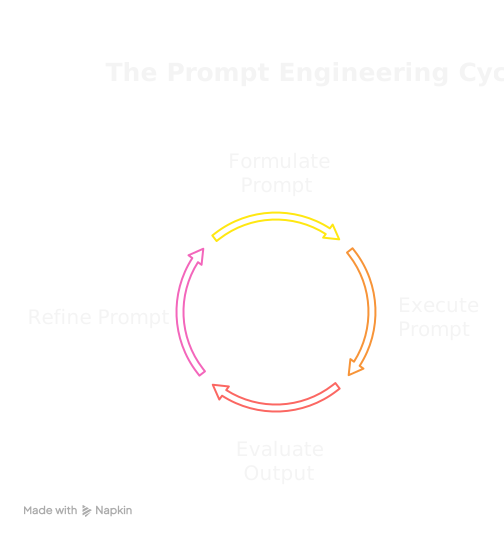
How Prompt Engineering Works
At its core, prompt engineering is the practice of crafting effective inputs for AI tools to guide their responses. Since AI models like ChatGPT don’t “think” like humans, the way you frame your request really matters.
For example:
- A vague prompt like “Write about marketing” may give a generic response.
- But a clearer prompt like “Write a short paragraph about email marketing strategies for small businesses” results in a much more useful answer.
This shows that even a small change in your words can lead to a big difference in output. That’s why learning how to give better prompts is essential.
Real-Life Examples of Prompt Engineering
Let’s take a look at how prompt engineering plays out in real-world scenarios:
- Content Writing: Bloggers can prompt AI to write SEO-optimized articles with a specific tone and structure.
- Programming: Developers ask AI to debug code or generate functions using very precise prompts.
- Customer Support: Businesses use tailored prompts to create instant replies for common customer questions.
In each case, a well-written prompt helps get faster, smarter, and more relevant results.
With a few tweaks to your prompts, you can go from basic to brilliant — and that’s where real value is created.
Why Prompt Engineering Matters in 2025
As AI continues to shape industries, from education to healthcare, the ability to interact with AI tools effectively is becoming a basic tech skill. In 2025, more businesses are using AI assistants, and more job roles now involve working with large language models.
Knowing how to engineer prompts:
- Increases your productivity
- Makes AI tools more accurate
- Helps avoid misleading or incomplete results
In short, it saves time and improves quality. And that’s exactly why prompt engineering is now seen as a high-demand skill.
Tips for Writing Better Prompts
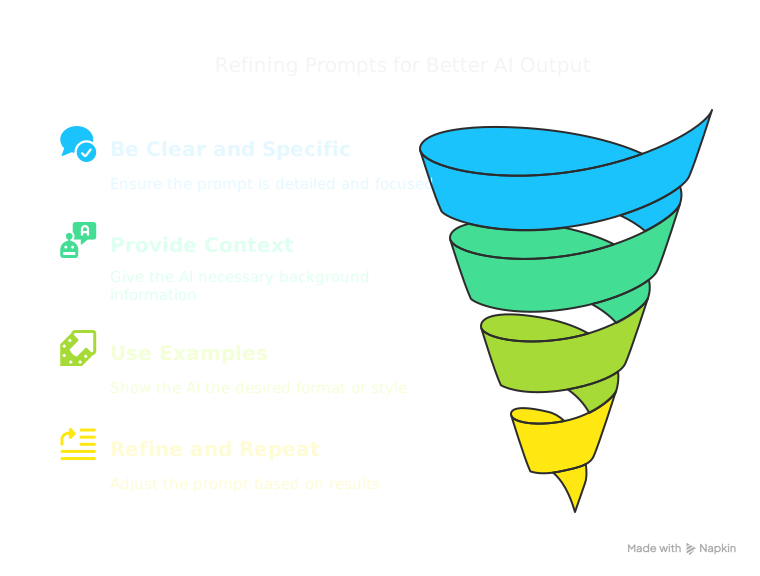
To master prompt engineering, follow these tips:
- Be clear and specific: Instead of “write a report,” say “write a 300-word report about AI trends in education.”
- Give context: Tell the AI who it’s writing for, what tone to use, and what you expect.
- Use examples: If needed, show the AI the format or style you want.
- Refine and repeat: Don’t be afraid to rephrase your prompt to get better results.
Just like learning a new language, practice makes perfect. The more you test and adjust, the more natural it becomes.
The Future of Prompt Engineering
As AI tools evolve, you might wonder: Will prompt engineering still matter? The short answer is yes — but it will also evolve.
Some AI tools are already being built to “understand” you better with fewer instructions. Still, clear communication will always be key. In fact, new job titles like Prompt Engineer and AI Interaction Designer are now emerging as part of the digital workforce.
So, whether you’re a writer, marketer, teacher, or student — learning how to guide AI is a smart move.
Ready to try your own prompt skills?
Start experimenting with ChatGPT or other AI tools today. And if you need help creating content, check out our AI-powered resources at mrhaseeb.com.
Want something even smarter?
Try our tool AskAlright — designed to help you craft high-quality content with smart, guided prompts.